
Avoiding Sugar Now = Enjoying Better Health Longer

5 Things to Know About Your Child’s First Dental Visit
September 5, 2020
Help Children Learn to Reach for Healthy Snacks
September 25, 2020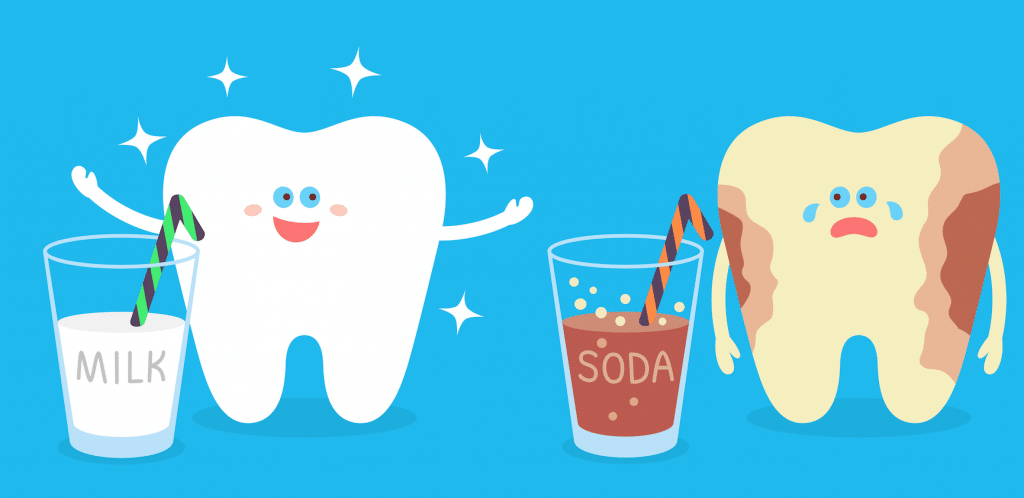
Sugar and teeth are not a good combination. Sugar is directly related to how much plaque assails developing and permanent teeth. Plaque is the substance that decays teeth and irritates developing gums. While sweet treats here and there are not something to worry about, snacking all day could equal a constant sugar onslaught on young teeth. Discover how the sugar your child eats today might turn into cavities later. And, how you can help them avoid that!
How Sugar Affects Teeth in Kids
When it comes to sugar and teeth, the real buzzword at the root of tooth decay is bacteria. Oral bacteria love to eat sugar. Sugar residue that is in your mouth after you eat is consumed by oral bacteria. And then, these same bacteria create acids that eat away at tooth enamel causing cavities. (Fun fact: it only takes 20 seconds for the bacteria on your teeth to combine with the sugar and turn into acid.)
Are Baby Teeth Worth Protecting?
As a parent, you may think that if a child loses a baby tooth early, no big deal. But, actually, it is. Baby teeth serve an important purpose. They contribute to proper speech development, aid in chewing food properly, support healthy self-esteem, and act as space-holders for permanent teeth so that straight, functional smiles can result. Going the extra mile by protecting and nurturing baby teeth DOES make a BIG difference in the current and future health of your child. As a matter of fact, early childhood tooth decay is a big problem. According to the Centers for Disease Control and Prevention, 20 percent of children between the ages of 5 and 11 have tooth decay in at least one tooth. And, children who have poor oral health often miss more school and receive lower grades than children who don’t.
Be Intentional with the Food You Offer Your Child
According to the American Dental Association, there are four things to consider when planning out your child’s menus. First, understand that oral health and nutrition have a symbiotic relationship. Meaning that diet and nutrition affect the health of the tissues in the mouth; and the health of the mouth affects how nutrients are consumed. Secondly, eating sugars increases the risk of your child developing cavities. Thirdly, if your child often eats acidic foods or drinks, tooth erosion will increase leading to more cavities. And, finally, diet can impact your child’s risk of developing chronic gingivitis and/or periodontal disease.
Eat for Good Oral Health
When it comes to eating with oral health in mind, strive to offer your child a variety of foods from all the different food groups. This will ensure that his body receives the nutrients it needs for not only oral wellness, but whole body wellness (which affects oral wellness too). Your child’s diet should include fruits, vegetables, proteins, calcium-rich foods, and whole grains.
Calcium-rich foods include things like: milk, yogurt, cheese, almonds, and dark leafy vegetables. Also, phosphorus, which is found in eggs, fish, lean meat, dairy, nuts and beans helps build strong teeth.
Vitamin C supports gum health, so offer citrus fruits, tomatoes, peppers, broccoli, potatoes and spinach to ensure your child gets this vital nutrient.
Snack Smart
Frequent snacking can wreak havoc on smiles. The constant onslaught of sugars on your child’s teeth don’t give his body the time it needs to remineralize teeth after they are demineralized by the acids bacteria create after eating.
When planning snacks, be intentional about what you offer your child. Skip sugary treats like hard or sticky candy or fruit snacks. Instead, choose raw vegetables, fruits, plain yogurt and popcorn. Also, brushing teeth after snacking can help to keep cavities away. If toothbrushing isn’t an option, encourage your child to rinse their mouth with water to get rid of food particles.
Avoid Baby Bottle Tooth Decay
Parents, if you have a baby, toddler or young child, listen up! Calming a child with a bottle of juice, formula or juice may seem like the right thing to do when they are upset. But, sucking on the bottle (or sippy cup) coats the teeth and gums in liquid that can cause tooth decay. Especially when the child is allowed to continue sucking on the bottle or cup for long-periods of time. Don’t put children to bed with a bottle or cup and don’t let them walk around the house constantly sucking on these items. Their little teeth and gums will pay for it. Hydration and nutrition are important, but once the child is done drinking, take the bottle or cup away. Wipe the baby’s gums with a clean gauze pad or washcloth after each feeding.
Call to Schedule an Exam Today
Need more tips? Call our office at (813) 576-0200 to learn more about how to care for your child’s teeth and oral health today and as they grow. Our friendly staff is here to help you every step of the way!